

Get Safe Donor Milk From The Milk Bank
Meet your baby’s short or long term feeding needs with safe donor milk.


Step 2
Complete Payment
Pay online or or discuss alternatives like our Medical Relief Fund.

Access Safe Donor Milk When Your Baby Needs It
The Milk Bank has the unique ability to provide families in our communities with a readily available source of safe donor milk.
Quick access to Pasteurized Donor Human Milk gives parents peace of mind. The Milk Bank provides safe donor milk as a medical treatment, to bridge a gap, or to help meet breastfeeding goals.
Safety Standards
All milk from The Milk Bank follows strict safety standards established by Human Milk Banking Association of North America (HMBANA). These guidelines have been established with the advisement of the Centers for Disease Control (CDC), the Food and Drug Administration (FDA), and the blood and tissue industries.
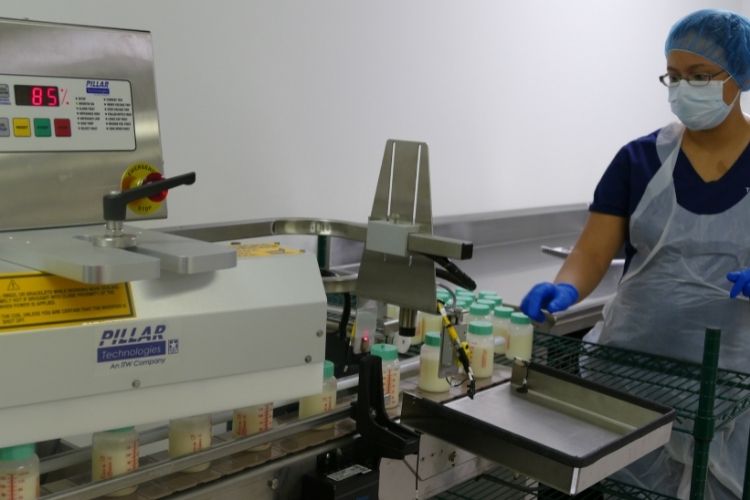
Approved milk donors are rigorously screened, which includes blood testing for infectious diseases. Milk from approved donors is pasteurized and tested to ensure safety for the most fragile of infants.
Why is there a processing fee for donated milk?
The processing fee covers the cost of donor screening, nutritional analysis, pasteurization, microbiological testing, and cold storage. These steps ensure donor milk is safe for the most fragile babies. The Milk Bank primarily serves NICU babies in the hospital.
Like other tissue banks, milk banks have many layers of safety before milk reaches tiny tummies. Keep reading below to learn more about our safety standards.
The Milk Bank has a sliding-scale Medical Relief Fund so that our processing fee doesn’t prevent families from getting the help they need.
REQUEST SAFE DONOR MILK
In order to get started, download the outpatient packet information
or submit the Outpatient Intake Form online.
Not sure where to begin? That’s okay! Please call one of our specialists at 317-536-1670 or email outpatient@themilkbank.org.
Outpatient Program FAQ
Whether you’re bridging a small gap or need ongoing help – get started by checking out our recipient intake form. If you are accessing 40 ounces or less, you won’t need a prescription & can typically handle the entire process online.
If you need more than 40 ounces or are interested in our sliding-scale Medical Relief Fund, a follow-up call from our team will help guide you through the remaining steps!
Donor milk for outpatient families goes through the same important safety measures as milk used for the most fragile NICU babies! Hospitals pay the processing fee to offset these costs.
It’s an honor to also serve babies at home, but this processing fee can be a barrier. Thanks to financial support from the community, we have a sliding-scale Medical Relief Fund for families who need milk for medical reasons.
Most families can access milk in less than 24 hours via our Milk Express program. Orders received during business hours that require shipping are generally received next day.
The Milk Bank Milk Express program provides convenient pick-up sites in the community. You can select a location near you when completing the Outpatient Intake Form.
Not near a Milk Express site? No worries, we can also ship milk directly to your home. Additional S&H fees apply. We pass along the discounted rate we receive from UPS.
Several states, as well as Tricare insurance for military families, may offer reimbursement of Pasteurized Donor Human Milk in some situations. The Milk Bank cannot file insurance claims on your behalf, but we can provide the information you need to request reimbursement if you think you might be covered.
Baby Bailen, who needed donor milk after cranial surgery at 10 weeks old.
What are medical conditions that may benefit from pasteurized donor human milk?
Pasteurized Donor Human Milk has been scientifically proven to benefit infant health, especially those with complex medical conditions following hospital discharge. Some common examples include:
- Prematurity
- Necrotizing enterocolitis (NEC)
- GI disorders
- Pre- and post-operative nutrition
- Kidney, heart, or liver disease
- Treatment for infectious diseases
- Immunodeficiency disorders
- Sever formula intolerance
How pasteurized donor human milk helps meet infant feeding goals.
PDHM can also serve as a short-term bridge until maternal milk supply is established, supporting family’s infant feeding goals. It may also be used in circumstances where there is no access to mother’s own milk.
- Maternal illness or absence
- Delayed or low milk supply
- Maternal medication contraindications
- Adoption
- Foster of kindship care
- Maternal mortality
- Surrogacy