
how milk banking works
What actually happens to donated milk.
Frozen milk from carefully screened donors follows an evidence-based, accredited process before it is sent to babies in hospitals and at home. Here is the whole journey, from donor screening to a baby who needs it.
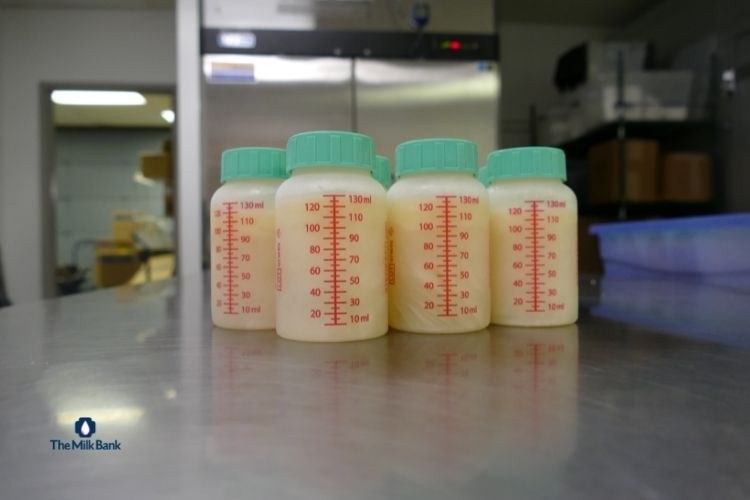
inside the process
See donated milk being prepared for pasteurization.
This approved video from The Milk Bank's media library gives a brief look inside the processing environment before milk moves through pasteurization, testing and release.
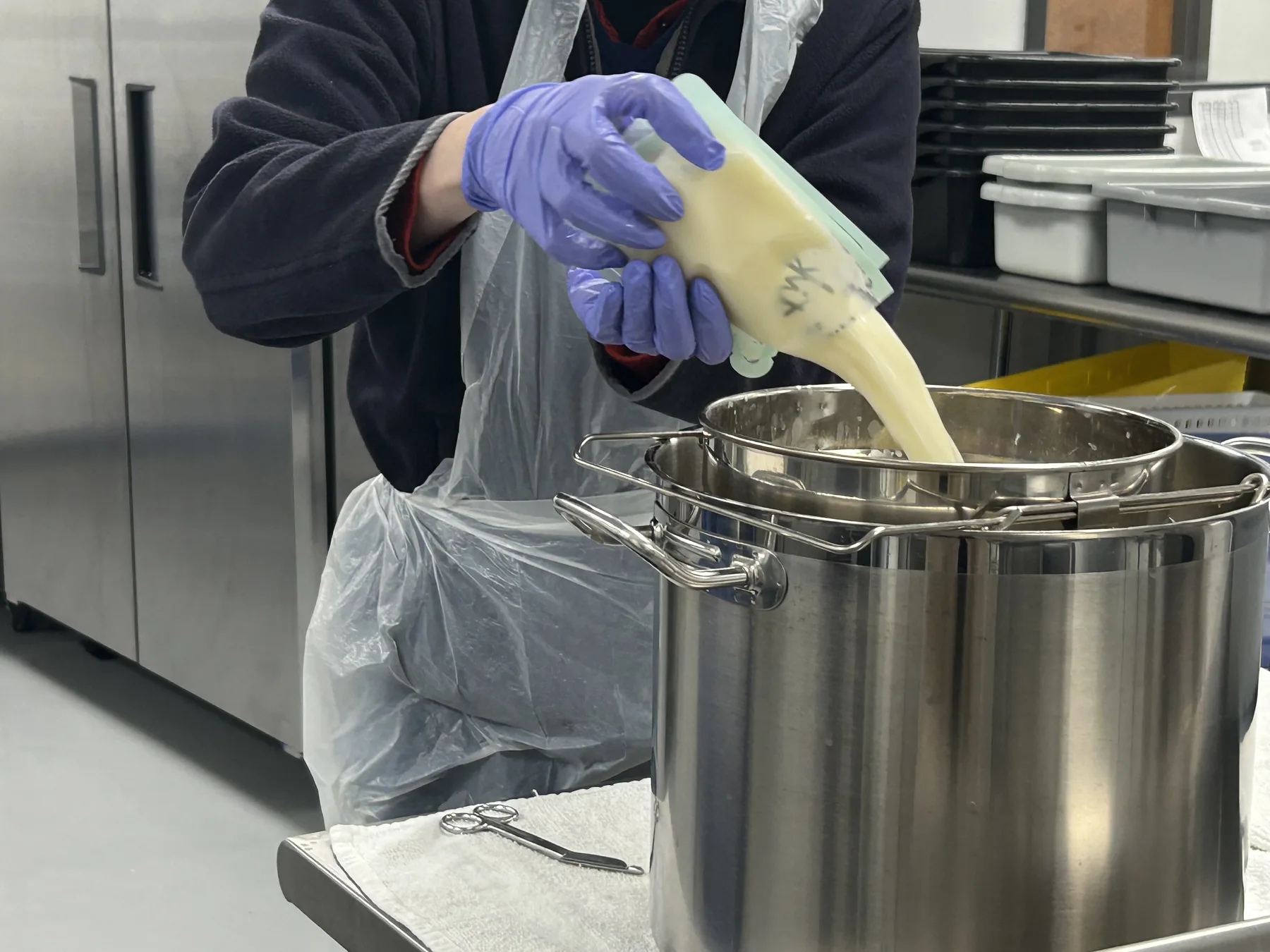
the journey
From screening to a baby who needs it, in eight steps.
Every step exists for one reason: to protect the medically fragile infants and families who depend on donor milk.
Donors are screened and approved
Before milk enters the processing system, donors complete health and lifestyle screening and required blood testing. Only approved donors can provide milk for distribution to hospitals and families.
screening comes first-
It arrives and is logged
Your milk arrives frozen, is weighed, and is recorded under your own Donor ID. From this moment it is tracked at every step, so its full history stays connected to it from your freezer all the way to a baby.
tracked by your donor ID -
It's thawed and analyzed
In the lab it is gently thawed and nutritionally analyzed for fat, protein, and other components. Human milk varies from mother to mother, and this is how the team understands exactly what your milk contains.
-
It's pooled with other donors
Milk is combined from multiple donors, typically 4–6. Pooling helps balance the nutritional and immunological components of the milk.
-
It's bottled and bar-coded
The pooled milk is portioned into specialty bottles, sealed, and labeled with a tracking bar code. Every bottle can be traced back through its whole journey, which is what makes full accountability possible.
-
It's pasteurized
Each batch is pasteurized using the Holder method, heated to 62.5°C for 30 minutes, then rapidly cooled. This destroys any harmful bacteria and viruses while preserving most of the immune properties that make human milk irreplaceable.
-
It's tested by an outside lab
One bottle from every batch is sent offsite to an independent, accredited laboratory for a final microbiological test. Nothing is dispensed until that lab certifies zero bacterial growth. If a batch doesn't pass, it isn't used.
only zero-growth milk is dispensed -
It reaches a baby
Once it clears every check, your milk is sent to hospitals and families as lifesaving nutrition for the babies who need it most. The journey that started in your freezer ends at a bedside.
Why so much safety
Because of who we serve
80% of the milk we dispense goes straight to a NICU. Every step in our process exists for one reason: to protect the medically fragile infants who depend on donor milk.
These babies – often weighing barely a pound – cannot afford a single misstep in screening, handling or testing. Their immune systems are still developing, their gut is vulnerable, and their care teams rely on donor milk that is as safe as medicine. These safeguards allow hospitals to feed milk to the tiniest patients with complete confidence.
The Milk Bank is accredited annually by the Human Milk Banking Association of North America and registered with the FDA, following guidelines informed by the CDC and the blood banking industries. It is medicine, handled like medicine for babies with no other options.
now that you've seen it
Every safe bottle starts with a screened donor.
The screening, processing, testing, and traceability you just saw are what make donor milk appropriate for medically fragile infants and families who need a safe option.